Burst Pipe Repair in Caldwell, ID
A burst pipe doesn't ease in. It's water spraying from a crawlspace line, a ceiling stain spreading by the minute, or a puddle growing under the water heater — and it doesn't stop until the valve closes. In Caldwell, bursts follow the freeze-thaw cycle: a pipe splits during a cold snap, the ice plugs it, and the break lets go when the thaw comes. Corrosion in older galvanized lines writes the other half of the burst calls — a wall thinned by decades gives way on an ordinary Tuesday.
Your first move matters more than anything that follows: shut off the main water valve. Every minute of full-pressure flow is more water in the walls, floors, and crawlspace. If you don't know where your main is, that's worth saying on the call — your provider can talk you to the meter shutoff while help is arranged. Once the water is off, the flooding phase is over and the repair phase can start.
The repair itself is defined by the damage: your provider finds the break, cuts out the failed section, and fits new pipe matched to what's already in your home — copper, PEX, or galvanized. Then pressure comes back gradually, joint by joint, with every connection checked before the line is trusted again. Ask what failed and why — a freeze split, a corroded joint, and a failed fitting each point to different prevention steps.
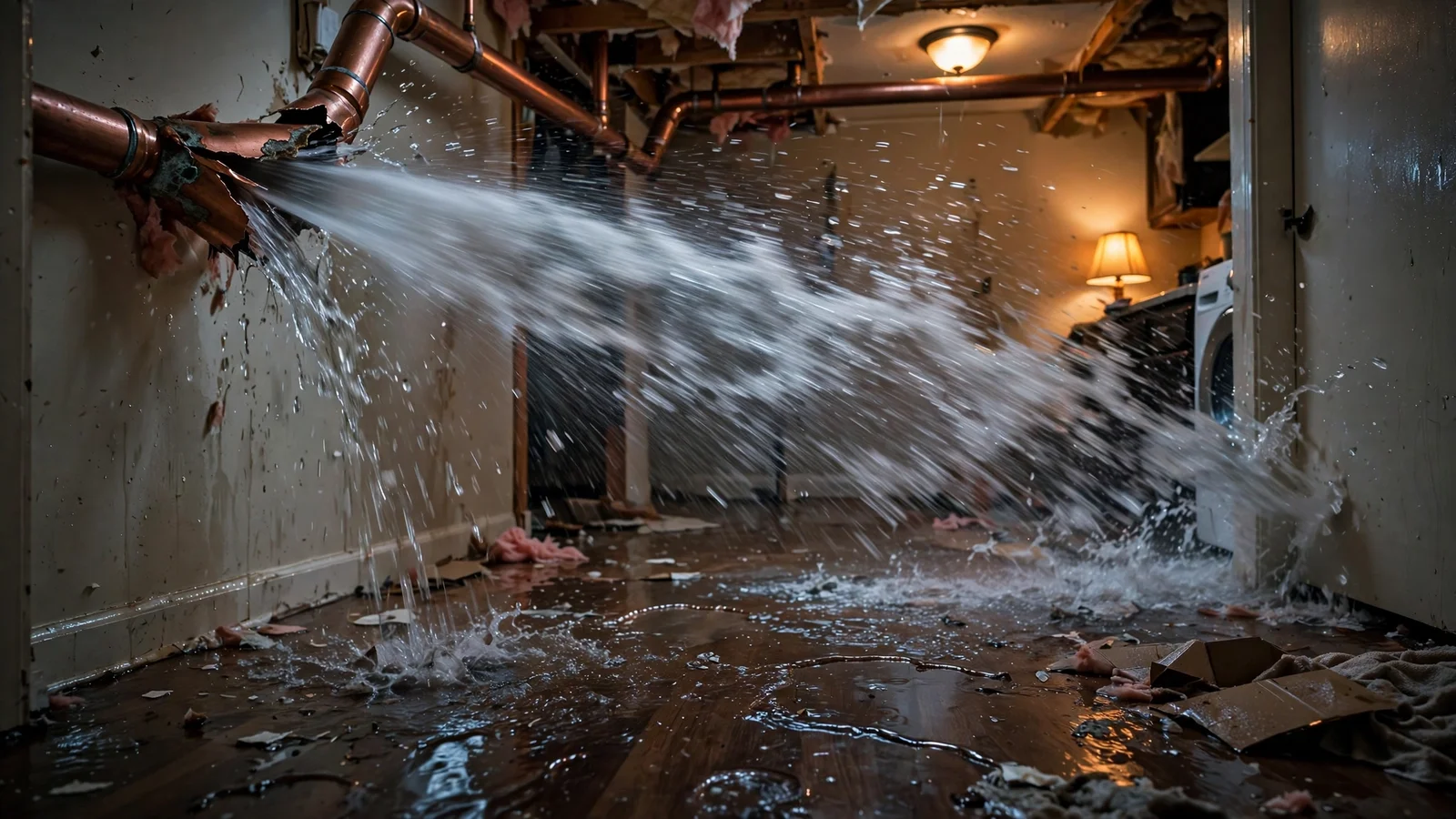
Signs of a burst or breaking pipe
- Water pooling in the crawlspace, basement, or under a slab edge
- A ceiling or wall stain that is spreading or actively dripping
- The sound of running or spraying water when every fixture is off
- A sudden drop in water pressure across the house
- A water meter that keeps moving with all fixtures shut off
- Damp, musty smell or warped flooring appearing near a plumbing wall
How your provider repairs a burst pipe
1. Stop the water and find the break
With the main valve closed, your provider traces the water back to its source — the visible puddle is where water collected, not always where it escaped — and pinpoints the failed section.
2. Cut out the failed section
The split or corroded length comes out entirely, cut back to sound pipe on both sides. Patching over a stressed section just moves the failure to next winter.
3. Fit the replacement
New pipe goes in matched to your home's existing material and diameter, with proper fittings and supports. If the break exposed a longer run of tired pipe, your provider shows you and explains the options before anything extra is touched.
4. Pressure back on, gradually
Water returns slowly while every new joint is watched under building pressure. Only when the line holds dry does the repair count as done — and you'll know where your main valve is before they leave.
Burst pipes in Caldwell homes
Caldwell bursts cluster around the cold snaps — a January freeze splits lines across town, and the thaw a few days later is when the calls land. The older farmhouses take the worst of it: galvanized lines already thinned by age have the least margin for ice expansion, and crawlspace runs sit unprotected at outdoor temperature. Newer subdivisions aren't immune — a garage run or an exterior-wall branch freezes just as solid as a farmhouse line, and PEX bursting at a fitting makes the same mess as copper splitting mid-run. Local plumbers work the whole cycle here, which is why their first questions are about the freeze history and the main valve, not just the puddle. On acreage properties toward Sunnyslope, a burst does not always start in the house itself. Many of those homes pair the main building with a shop, an outbuilding, or a detached garage fed by its own exposed run — spaces that sit unheated between uses. A line that splits there can discharge into soil or under a slab edge long before anyone is inside to notice, so a provider will often ask about outbuildings and secondary runs, not just the room where water appeared.
Need burst pipe repair in Caldwell?
One call connects you with a local technician. No forms.
(555) 234-5678📞 Call Now