Pipe Leak Repair in Caldwell, ID
Most pipe leaks don't announce themselves with a flood. They show up as a water bill that crept up, a musty smell under a sink cabinet, a stain that wasn't on the ceiling last month, or a patch of floor that feels soft. Behind each of those is water moving somewhere it shouldn't — a pinhole in a copper line, a joint that's been weeping for months, a supply line in the crawlspace dripping into the dirt.
Finding the leak is the skilled half of the job. Water travels — along pipes, down framing, across the top of drywall — so the wet spot is often feet from the failure. Your provider traces it properly: pressure checks, moisture readings, and systematic elimination of fixtures and branches, rather than opening walls on a guess. The goal is a repair that opens exactly what needs opening and nothing more.
The repair depends on what failed: a section replaced, a joint remade, a fitting swapped. What matters is the diagnosis behind it. A pinhole in one spot of a copper run can mean the whole run is thinning; a single weeping joint usually means a single bad joint. Ask your provider which pattern they're seeing — the answer decides whether this is a one-time fix or the first warning of a bigger one.
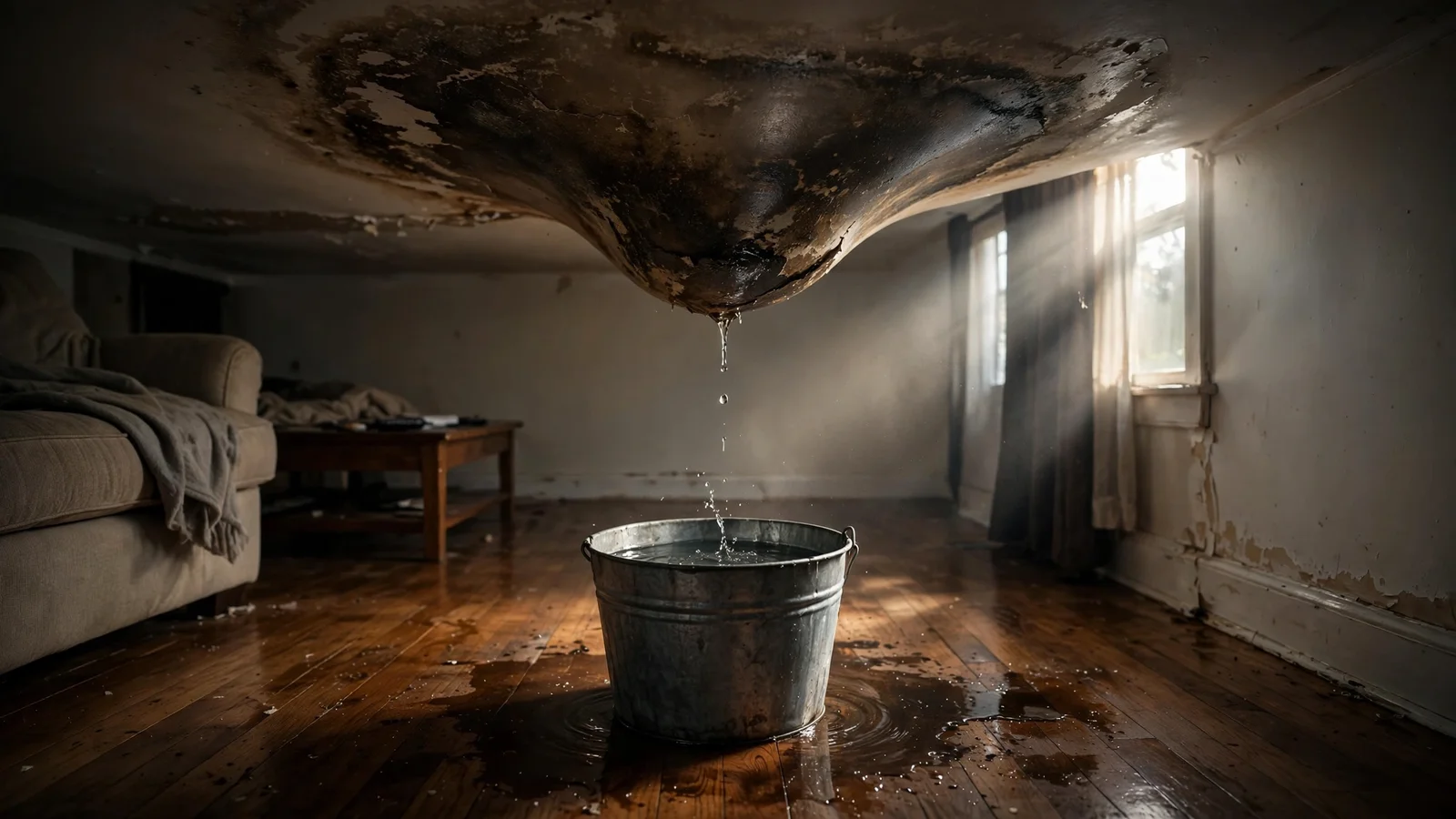
Signs you have a pipe leak
- A water bill rising with no change in how much water you use
- The sound of water running when every fixture in the house is off
- Musty smells, staining, or soft spots on walls, ceilings, or floors
- Low water pressure that keeps getting worse
- Damp soil or an unusually green strip along the water line's path outside
- A water meter dial that moves when nothing in the house is running
How your provider finds and repairs a leak
1. Confirm and narrow down
Your provider starts with the meter and pressure checks to confirm the leak is real, then isolates branches and fixtures to narrow it to a zone of the house — supply side or drain side, upstairs or crawlspace.
2. Pinpoint the failure
Moisture readings, listening equipment, and targeted access points locate the actual failure — the pinhole, joint, or fitting — rather than the place the water happened to surface.
3. Repair the section
The failed length or fitting is replaced and the joint remade properly. If the surrounding pipe shows the same wear, your provider shows you what they're seeing before any wider work is discussed.
4. Verify under pressure
The system goes back to full pressure and every repaired point is checked dry, along with a final meter reading — a still meter with everything off is the proof the leak is gone.
Pipe leaks in Caldwell homes
Caldwell's century of housing writes its leak patterns. The older farmhouses carry galvanized lines at or past their service life — threaded joints weep, and pipe walls thin from the inside until a pinhole opens. Mid-century copper develops pinholes where the water chemistry and the pipe's age meet. The new subdivisions leak at fittings and connections instead, often showing up months after construction settles. Underneath it all, the valley's soil shifts seasonally and stresses the buried water line between the meter and the house — a leak there shows up as a soft, green strip in the yard and a bill that makes no sense. Local plumbers know which pattern matches which neighborhood, and it shortens the search considerably. Season also complicates leak diagnosis here. December is typically among Caldwell's wettest and snowiest stretches, and later snowmelt and spring runoff can push moisture into crawlspaces even when no pipe has failed. A damp crawlspace in February therefore has two possible authors — meltwater finding its way in, or a supply line weeping above it. Local pros separate the two with the meter and pressure checks described above before recommending any opening or digging, rather than treating every wet spot as a plumbing failure.
Need pipe leak repair in Caldwell?
One call connects you with a local technician. No forms.
(555) 234-5678📞 Call Now