Frozen Pipe Repair in Caldwell, ID
You turn on the kitchen faucet on a cold Treasure Valley morning and get a trickle — or nothing at all. Somewhere between the meter and that tap, water has frozen solid inside the pipe. Caldwell's cold snaps do this every winter: overnight lows dive into the teens, wind pushes cold air through crawlspace vents, and the lines that were fine in November are ice by January. A frozen pipe isn't just an inconvenience — it's a pipe under pressure, and ice expansion is what splits copper and galvanized lines.
Your provider's job starts with finding the freeze. A single dead faucet points to a branch line; a whole house without water points to the main or a trunk line in the crawlspace. Then comes controlled thawing: gradual heat applied from the faucet back toward the frozen section, so melting water always has somewhere to go. Thawing from the middle or heating too hard is how pipes crack — the controlled version protects the line while it opens back up.
The thaw isn't the finish line. The section that froze is the section that got stressed, and your provider checks it — and the joints around it — for splits and slow leaks once pressure returns. A split that only shows under full pressure will flood a crawlspace quietly for weeks if nobody looks. Ask your provider what they found and what, if anything, needs insulation or rerouting so the same spot doesn't freeze next winter.
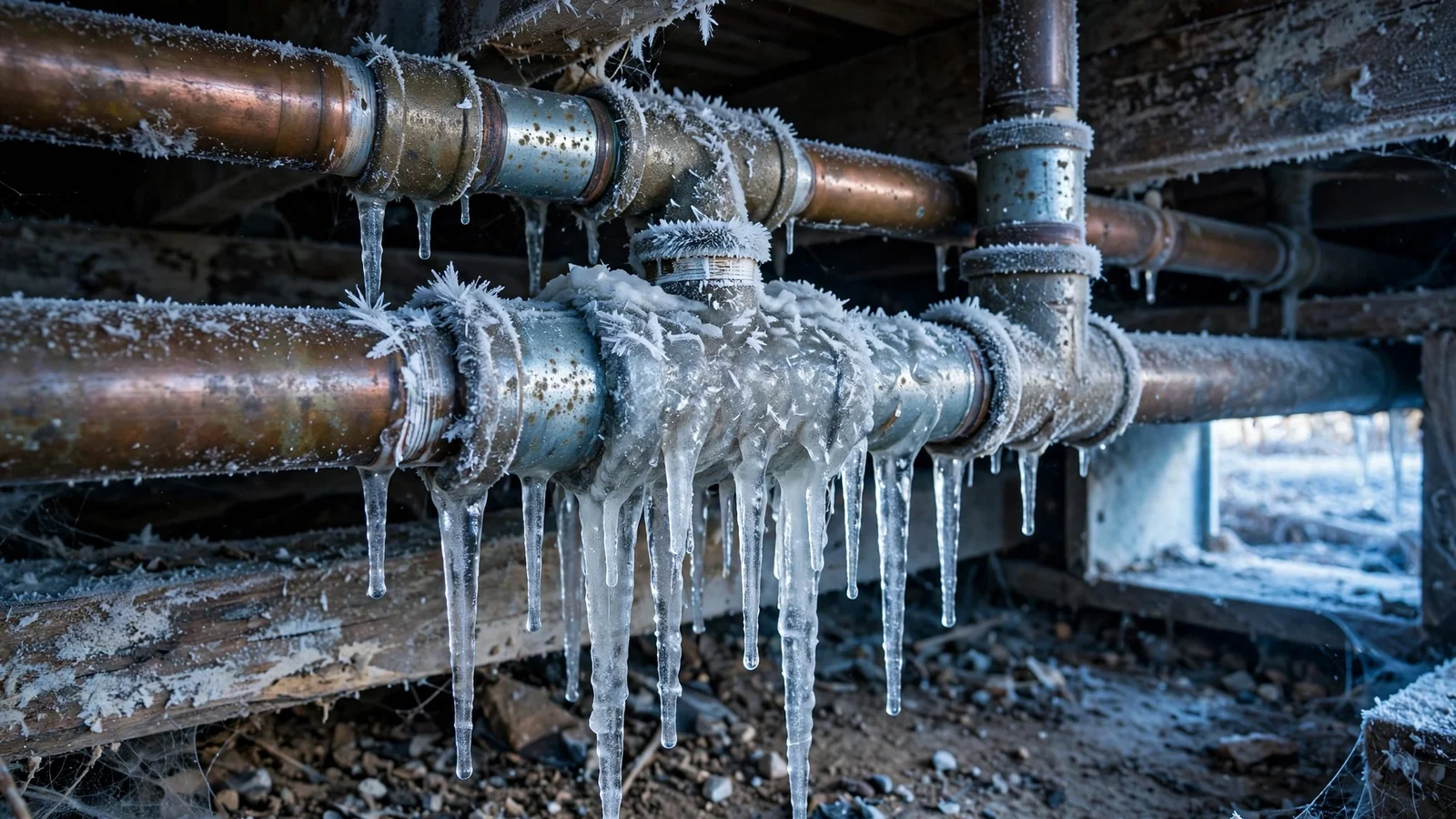
Signs a pipe has frozen
- Little or no water from one or more faucets on a cold morning
- Frost visible on an exposed pipe in the crawlspace, garage, or basement
- One section of pipe noticeably colder than the rest — the classic freeze check
- Gurgling or banging sounds from a line as water tries to get through
- A bulge or slight swelling along a pipe run
- Water that returns as a trickle, then stops again
How your provider thaws a frozen pipe
1. Locate the frozen section
Your provider works backward from the dead fixtures, checking the likely runs first — crawlspace lines, garage walls, exterior-wall branches — and narrows the freeze to a specific section before any heat is applied.
2. Thaw with controlled heat
Gradual, controlled heat — never an open flame — applied starting at the open faucet and working toward the freeze, so meltwater drains instead of building pressure behind the ice.
3. Check the stressed section
Once water moves again, your provider inspects the thawed section and nearby joints under full pressure. Ice splits often hide until the line is live; catching one now is the difference between a repair and a flood.
4. Protect the spot going forward
Insulation on the repaired run, vent covers or heat tape where the layout calls for it, and a plain walkthrough of which lines in your home are freeze-prone — so the same section doesn't freeze next winter.
Frozen pipes in Caldwell homes
Caldwell's freeze map follows its housing. The older farmhouses near the original townsite run plumbing through vented crawlspaces — at outdoor temperature all winter — and their galvanized lines are the first casualties of every hard cold snap. The newer subdivisions toward Nampa and Middleton freeze differently: long PEX runs through unheated garages and above garage ceilings, and upstairs bathrooms plumbed into north-facing exterior walls. Add hose bibs left connected into fall and irrigation lines that were never blown out, and local plumbers stay busy from the first freeze to the last. They know which layout you have from your address and your description — and they check those spots first. Manufactured homes around Caldwell add another pattern. Their supply lines run under the floor rather than inside a heated foundation, so the skirting is the main barrier between the pipes and winter air. A missing panel, a gap opened by wind, or torn under-belly insulation lets cold air circulate directly around those lines. When a manufactured home loses water on a still, cold morning, a local pro will often check the skirting and the under-floor run before looking inside the walls.
Need frozen pipe repair in Caldwell?
One call connects you with a local technician. No forms.
(555) 234-5678📞 Call Now