Water Line Repair in Caldwell, ID
The main water line is the single pipe everything in your home depends on — buried from the meter at the street to the point where water enters the house. When it fails, the whole house feels it: pressure drops at every faucet, the yard develops a swampy patch that never dries, or the meter spins with the house shut down. It's out of sight, under soil and concrete, doing its job quietly for decades — until it isn't.
Water lines in Caldwell face a particular set of stresses. The valley's soils expand and contract with the seasons and work against buried pipe year after year. Tree roots find the joints. Older galvanized lines age out. And winter freezes reach shallow-buried sections near the meter and the foundation. A failure can be a crack, a crushed section, a separated joint — the symptoms rhyme, but the repairs differ, which is why locating the failure precisely matters before any digging starts.
Your provider diagnoses the line first — pressure tests and meter checks to confirm the failure is in the yard line and not inside the house, then locating work to find where along the run it failed. The repair is either a targeted fix at the failed section or, when the line's overall condition says so, a new line. Either way, you should hear the reasoning: the age and material of your existing line is what decides it.
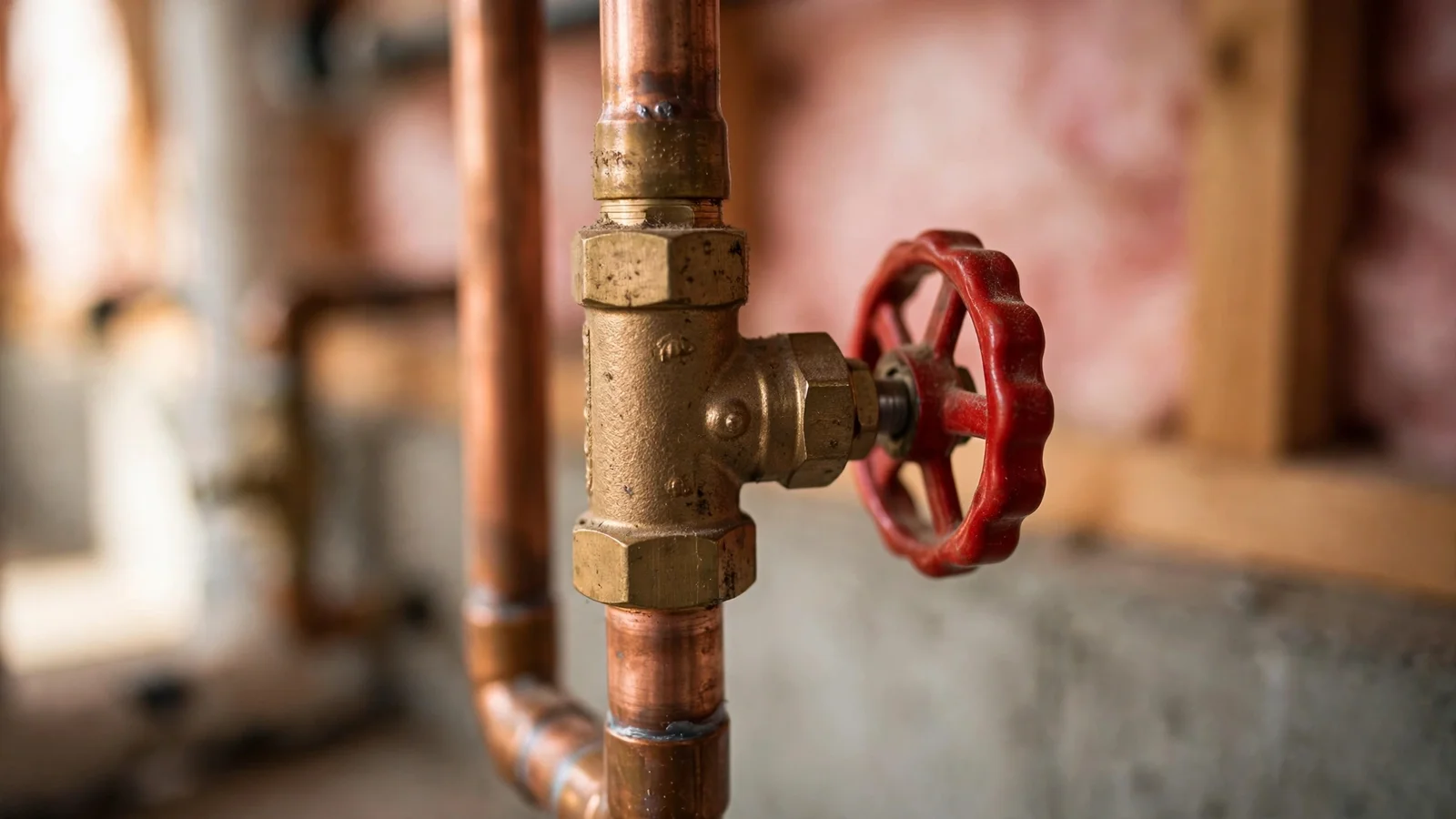
Signs your main water line is failing
- Low water pressure at every fixture in the house, all at once
- A wet, soggy, or unusually green area in the yard along the line's path
- A water meter that runs even with the house's main valve closed
- Discolored water after the line has been disturbed or repaired nearby
- The sound of running water near the meter or foundation with fixtures off
- A section of driveway or sidewalk that is sinking or cracking
How your provider repairs a water line
1. Confirm the failure is the yard line
Meter and valve tests separate a yard-line failure from an in-house leak, so the digging — if any — happens in the right place. No excavation starts on a guess.
2. Locate the failed section
Your provider traces the line's path and pinpoints the failure: the crack, root intrusion, or separated joint. Precision here is what keeps a repair a repair instead of a yard excavation project.
3. Repair or replace the section
A sound line with one failure gets a targeted repair. A line whose material or condition has failed overall gets a straight recommendation for replacement — with the reasoning shown, not just stated.
4. Restore pressure and check
The line is flushed, pressure restored gradually, and the repair verified at the meter and at the fixtures — full pressure back, meter still when the house is off.
Water lines in Caldwell
Caldwell's water lines live in valley soil that doesn't sit still — seasonal moisture swings shrink and swell the ground, and buried pipe flexes with it for decades until a joint gives. The older streets near the townsite carry lines as old as the houses: galvanized and early plastics at the end of their expected life. The fast-growing edges of town have the opposite profile — new lines, but long runs and construction traffic over shallow trenches. Cottonwoods and other fast-growing yard trees, planted all over Caldwell, send roots straight for line joints. Local plumbers read the address and the symptom list and already know which of these stories is most likely yours. Canyon County's clay pockets add a local twist. Plumbing work across Ada and Canyon Counties turns up clay soil movement that bellies, misaligns, and cracks buried lines as the ground wets and dries. In Caldwell that cycle is sharpened at the edge of irrigated ground, where soil moisture swings between the canal-fed growing season and a dry winter. A yard line crossing that boundary can be stressed at the same joint repeatedly, which is why a repeat failure in the same spot points to movement, not just age.
Need water line repair in Caldwell?
One call connects you with a local technician. No forms.
(555) 234-5678📞 Call Now